



Kamloops Art Gallery
Click for Website
Event categories: Galleries & Exhibits
Event tags: KAG
Diego Cruz
Garnet Dirksen
Anyssa Fortie
Dion Fortie
Ryland Fortie
Levi Glass
Xiao Han
Robin Hodgson
Steph Patsula
Curated by Craig Willms, Assistant Curator, Kamloops Art Gallery
After 25 years of providing space for aspiring artists of this region to study at home alongside peers from across the country and around the world, Thompson Rivers University’s Bachelor of Fine Arts (BFA) program officially closed this spring. In recognition, this exhibition celebrates a few of the many artists who graduated from this program and continue to create and exhibit work on regional, national, and international stages.
Since 2005, the Kamloops Art Gallery (KAG) has devoted one exhibition per year to the emerging artists of the Thompson Rivers University (TRU) BFA graduating class. When I began as KAG Assistant Curator in 2008, the BFA exhibition was the first exhibition I was given full autonomy to curate in The Cube. For the past 18 years, I have worked with a graduating student of the TRU BFA class every fall to realise a professional exhibition outside the context of art school. Over the years, the exhibition format has evolved, beginning with selected works that followed a conceptual thread in that year’s group of graduates. The current project model began in 2013, challenging emerging artists to create a new body of work and encouraging experimentation within their artistic practice.
For many, the exhibition in The Cube is their first professional exhibition in a public institution, and their first time working with a curator. These experiences built strong, enduring bonds and we have been proud to witness the artists we have worked with demonstrate their commitment to the visual arts through post-graduate work, exhibitions, artist residencies, and forays into other fields that embrace artistic minds.
The artists in this exhibition represent only a small selection of the many TRU BFA graduates who have continued to work as professional artists, arts workers, and creative professionals; they demonstrate the significant far-reaching and expansive impacts of this program and its graduates. The work in this exhibition illustrates varying approaches to a chosen medium, both embracing and challenging artistic traditions in photography, painting, sculpture, and performance. The exhibition brings together diverse research-based practices, incorporating explorations of cultural identity; mythology and popular culture; technological dependence; disposable culture; masculinity and transformation; motherhood; colonization; and notions of place.
Work by Xiao Han and Diego Cruz, who entered the program as international students, incorporates and expands on cultural traditions within their homelands of China and Mexico, respectively. Through music and movement Steph Patsula explores the resonance of place, particularly their hometown of Kamloops, where their artistic practice began.
Ryland Fortie’s sculptures address the connection between our increasing dependency on technology and natural resource extraction, while Dion Fortie reimagines found objects and upcycled materials to create mobiles that comment on our desire for cheap disposable culture. Levi Glass considers how photographic images are recontextualized in everyday life and probes the relationship between photography and sculpture, and Garnet Dirksen’s photographs reveal routes and sites that have been altered by shifting industry and colonization.
Addressing internal worlds and lived experiences, Robin Hodgson’s paintings tackle ideas of masculinity and transformation, reflecting on his own post-able body, and Anyssa Fortie delves into autobiographical details of her everyday life and motherhood through abstract painting.
Together, this selection of artwork reflects practices that were nurtured by the intensely supportive and committed faculty who formed TRU’s uniquely generative Fine Arts program and is representative of a cohort of artists who continue to take risks, ask questions, and find ways to express themselves through their practice.
Thompson Rivers University’s decision to shutter the fine arts programs will have many long-term effects, not least of which is the loss of a valuable part of what helps to define and disseminate our voices beyond this region. Many Kamloops-based artists sought out their artistic training at home and found themselves well prepared for the rigours of a Master’s program and public exhibitions. Others have chosen Kamloops, where the program has helped shape their artistic practices. Our hope is that the works in this exhibition open viewers’ minds to the importance of the visual arts as a vocation, and the added perspectives and creative outlooks that resonate across various fields of work and study and enrich all of our experiences.
Kamloops Art Gallery
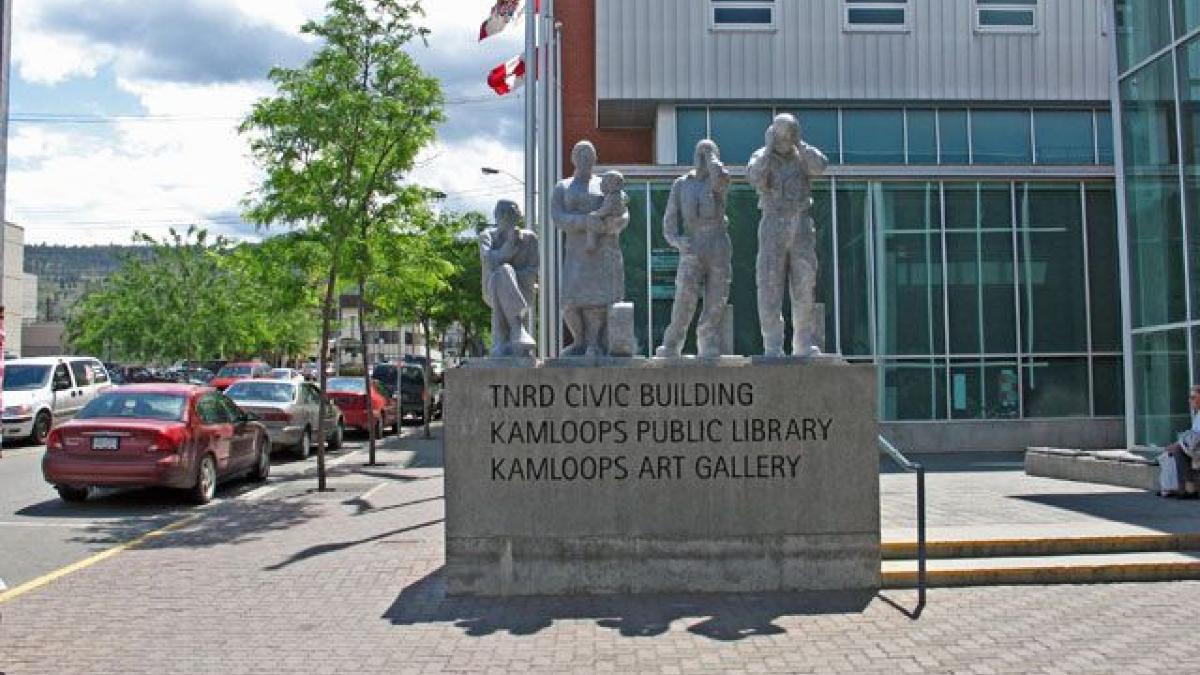
The Kamloops Art Gallery is a public, not-for-profit art gallery in downtown Kamloops, located at 101–465 Victoria Street within a civic building shared with Thompson-Nicola Regional District offices and the downtown TNRD Library. Established in 1978, it serves Kamloops, Tk’emlúps te Secwépemc, the Thompson-Nicola region and broader Canadian audiences through exhibitions, publications, learning opportunities and community programs.
The Gallery moved into its purpose-built home in 1998. Designed by architects Peter Cardew and Nigel Baldwin, the facility includes approximately 20,853 square feet of space, with exhibition galleries, multipurpose studios and workshop rooms, collection storage, a research library and administrative areas. Its changing exhibitions feature contemporary and historical visual art, including work by local, national and international artists.
The Kamloops Art Gallery maintains a growing collection of more than 3,100 artworks reflecting its exhibition and collecting history. The holdings include historical and contemporary works by Canadian and international artists in a range of media. Selected works are displayed in Gallery exhibitions, loaned to other institutions and presented in public locations around Kamloops, helping extend access to art beyond the downtown gallery.
The Gallery is a significant visual-arts resource for the Southern Interior and provides opportunities for artists, students, researchers and the general public to engage with art. It is situated on the unceded and unsurrendered lands of the Tk’emlúps te Secwépemc within Secwepemcúl̓ecw, the traditional territory of the Secwépemc people.