


Nature-Friendly Yards: The “Grow Wild” rubric
Credit for all photos: Elwira Rosiak
Our third Nature-Friendly Yards gathering took place in Teresa’s garden. Although it rained through much of the afternoon, the weather cleared just in time for us to spend the evening outdoors.
We began by learning about the Grow Wild rubric. Mandy from the Kamloops Naturalist Club introduced the tool and explained how it can be used to evaluate the ecological health of a yard. Rather than focusing on appearance alone, the rubric encourages us to consider how well a yard supports biodiversity through plant diversity, native plants, birds, insects, soil health, water, shade, and spaces for people to enjoy nature.
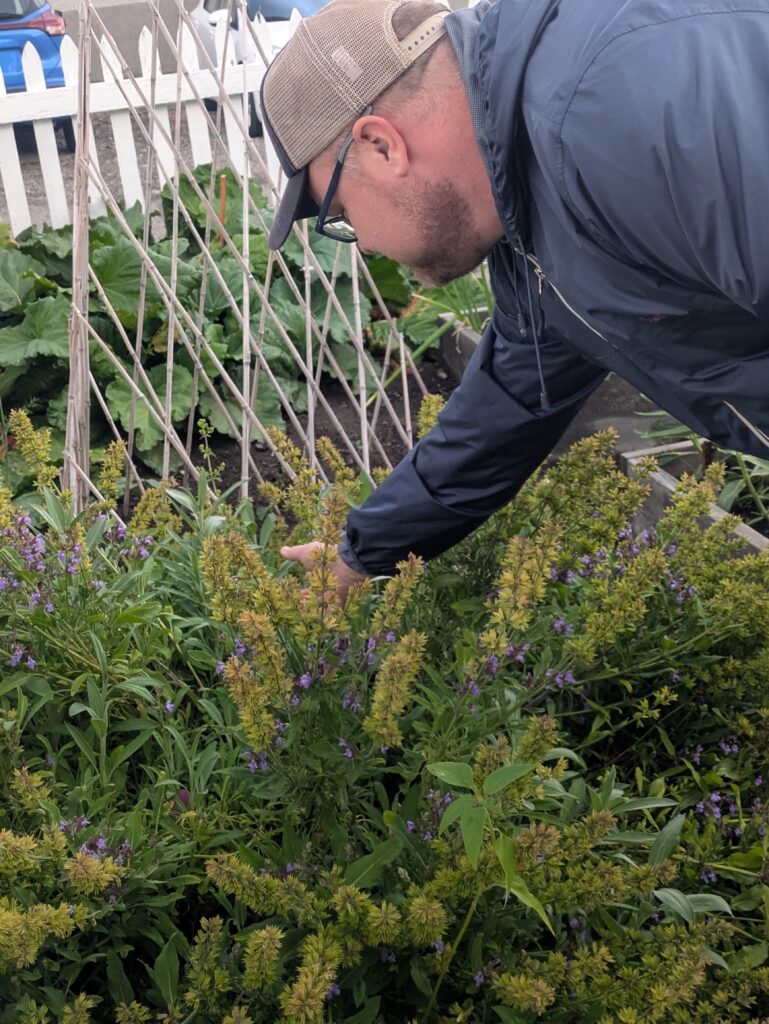
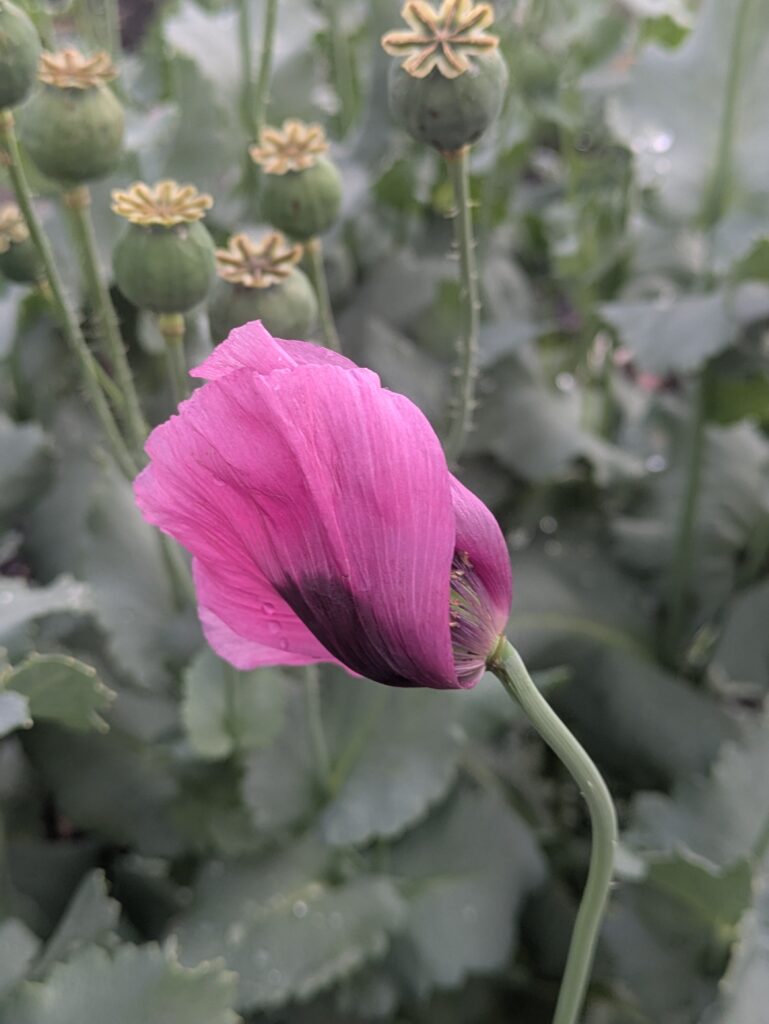
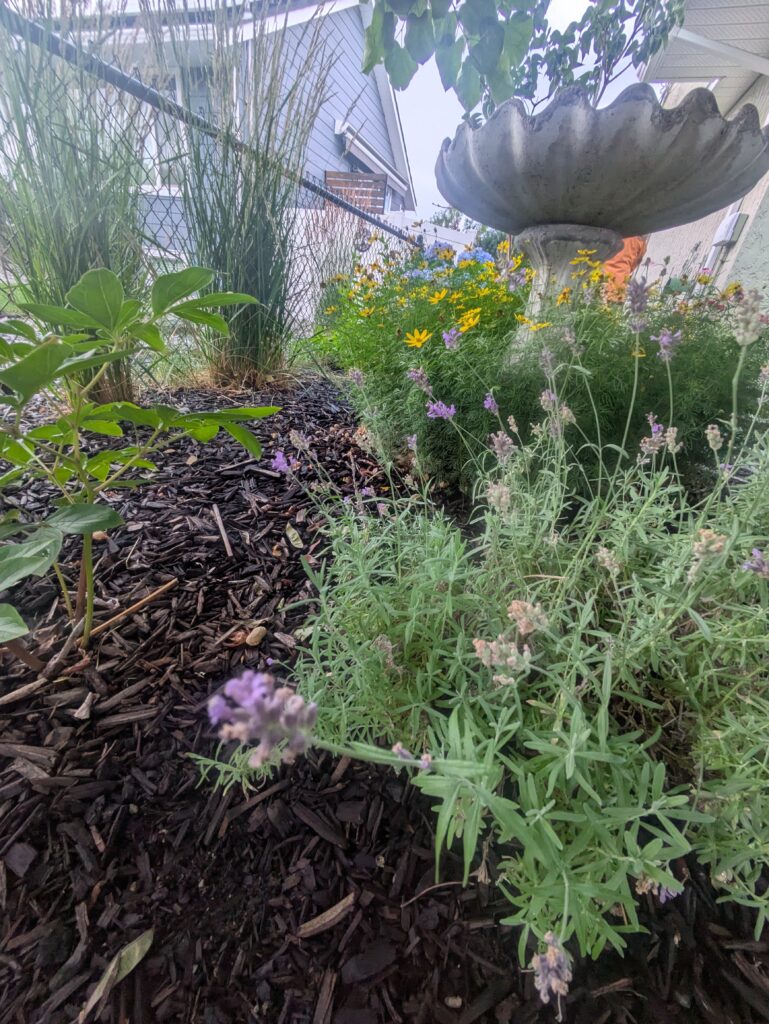
With that in mind, Teresa took us on a tour of her garden, showing us the different spaces and plantings around the yard. The garden included vegetable beds with pollinator-friendly plants, established trees, and planted areas in the front and side yards. It gave participants a chance to see how food growing, habitat, shade, and beauty can all exist in the same space. It also reminded us that every yard involves trade-offs. While another shade tree might provide additional habitat, in Teresa’s yard that space is intentionally left open for a clothesline, illustrating how nature-friendly gardening also needs to reflect the everyday needs of the people who live there.
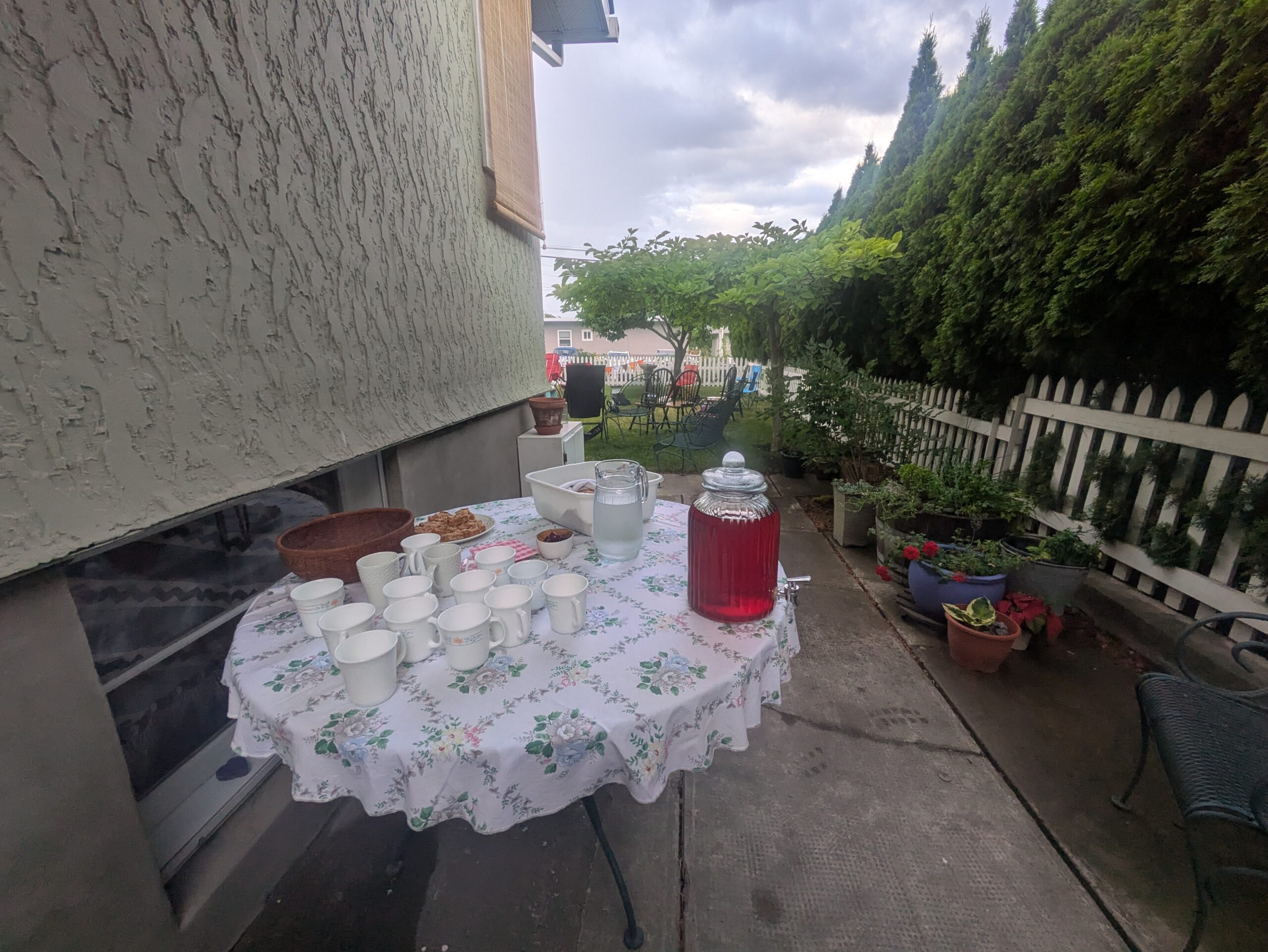
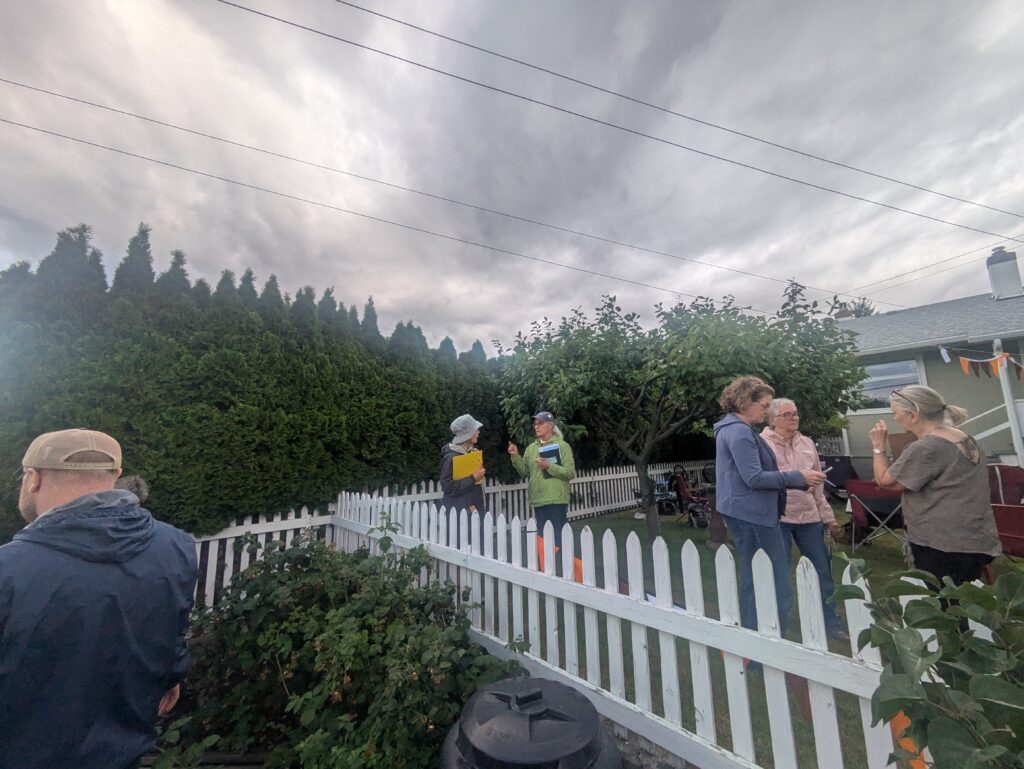
After the tour, we helped ourselves to Teresa’s homemade treats and refreshing iced hibiscus tea before gathering around the table to work through the rubric together. Section by section, we compared our observations, shared questions and ideas, and discussed what we had noticed in Teresa’s garden. We’ll be sharing the updated rubric with the broader Transition Kamloops community soon.
One of the highlights of the evening was the mix of experienced and new gardeners. That diversity of experience is exactly what we hope to foster through the Nature-Friendly Yards project. Experienced gardeners generously shared their knowledge, while newer gardeners brought thoughtful questions and fresh perspectives. Learning from one another is an important part of creating neighbourhood green corridors.
As we worked through the rubric, we kept coming back to one challenge: identifying native plants isn’t always straightforward. Unless you have experience or specialized knowledge, it can be difficult to know what is truly native to our region. It also doesn’t help that plants shared through friends, neighbours, and gardening groups are sometimes mislabeled or even invasive without anyone realizing it. The group shared several resources that can help, including the Thompson-Shuswap Master Gardeners’ guide to local native plants, Okanagan Xeriscape, the Field Guide to the Southern Interior, and Split Rock Nursery.
Other conversations flowed just as naturally. We talked about composting and the realities of doing so in areas where bears are common. We discussed supporting birds by first supporting the insects they rely on for food. Elaine shared several easy ways to attract beneficial insects, including planting yarrow, dill, sweet alyssum, cilantro, and goldenrod, and providing a reliable source of water. Nancy’s strong opinion of starlings also gave everyone a laugh.
The discussion soon turned to soil health, leaving patches of bare ground for native bees, and the difference between gently turning soil by hand and using a rototiller. From there, we found ourselves talking about fall garden cleanup and FireSmart landscaping. Many beneficial insects rely on stems, leaves, and other garden material for nesting and overwintering, yet FireSmart recommendations often encourage removing those same features close to our homes. It was a thoughtful conversation about finding the right balance between reducing wildfire risk and supporting biodiversity.
Several participants also shared that they have had their gardens recognized through pollinator-friendly and butterfly-friendly certification programs. The accompanying signs do more than recognize individual efforts. They educate neighbours, spark conversations, and encourage others to create habitat in their own yards. Developing Nature-Friendly Yards signage has been part of our vision from the beginning, but this conversation reinforced the value of making it a bigger focus in the future. Our goal is to create signage that celebrates local yards while encouraging neighbours to learn from one another and grow the nature-friendly yards movement across our community.
The evening ended with a look ahead to the next session in our series, which would focus on plant selection. One of the ideas we left with was that nature-friendly yards don’t all have to look the same. Every yard, gardener, and neighbourhood is different. Whether your garden is filled with native plants, vegetables, flowers that bring you joy, or a little of everything, there are many ways to create habitat and contribute to a healthier, more connected community. This project has always been about more than gardens. It’s about neighbours sharing knowledge, inspiration, and encouragement as we grow the nature-friendly yards movement together.
See previous posts about the Nature-Friendly Yard program: